Spay & Neuter Recovery Guide for Dogs & Cats
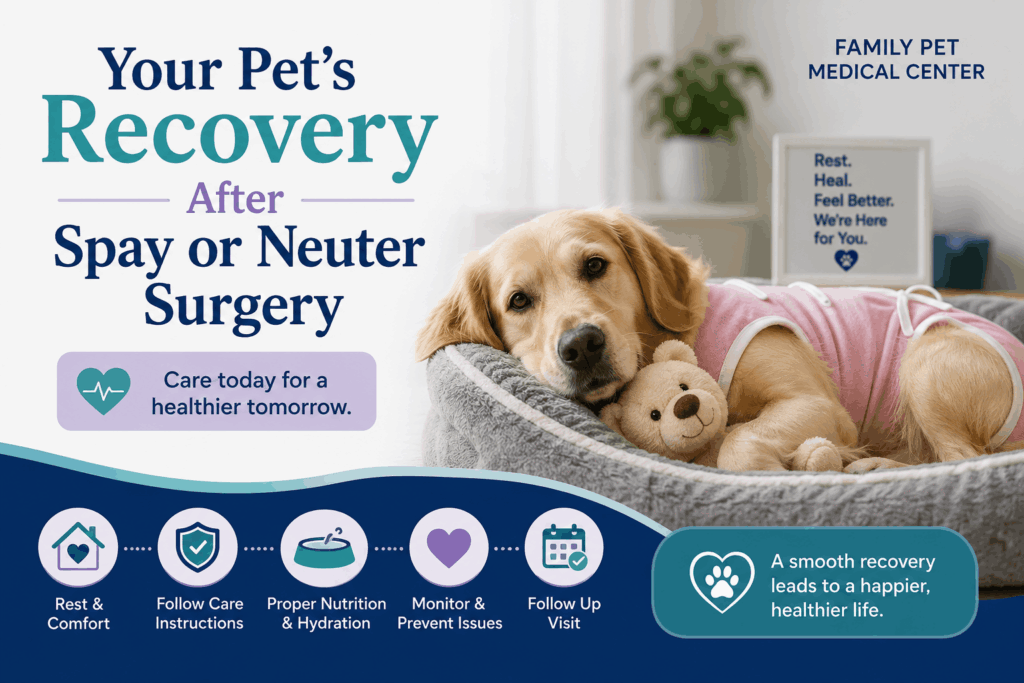
Bringing your dog or cat home after spay or neuter surgery is often a relief. The procedure is complete, your pet is back where they feel safest, and you're looking forward to helping them recover.
Then reality sets in.
Is it normal that they're sleepy?
Why won't they eat?
Can they jump on the couch?
Should they be wearing the recovery collar all the time?
Is the incision supposed to look like that?
If you're asking these questions, you're certainly not alone.
One of the most common concerns we hear from pet owners isn't about the surgery itself—it's about what happens afterward.
The good news is that most healthy dogs and cats recover very well following spay or neuter surgery. With a little patience, careful monitoring, and guidance from your veterinary team, most pets return to their normal routines within a couple of weeks.
This guide explains what you can expect during recovery, how to care for your pet at home, and what signs should prompt you to contact your veterinarian.
The First Evening at Home
The first few hours after surgery are often the quietest.
Your pet may seem sleepy, a little unsteady on their feet, or less interested in food than usual. These effects are commonly related to anesthesia and generally improve as the medication leaves their system.
Some pets prefer to go straight to bed.
Others may be awake but simply want a quiet place to relax.
This is completely normal.
Prepare a comfortable recovery area before bringing your pet home. Choose a calm space away from stairs, loud noises, young children, or other energetic pets.
Fresh water should be available, and your veterinary team will let you know when and how much food to offer that evening.
Don't be surprised if your pet isn't quite themselves during the first night. Rest is one of the most important parts of recovery.
The First 24 Hours
By the next day, many pets begin feeling much better.
In fact, one of the biggest surprises for pet owners is how quickly their dog or cat seems to bounce back.
A puppy who was sleepy the night before may suddenly be running laps around the living room.
A kitten may decide it's the perfect time to chase toys across the house.
While it's wonderful to see your pet feeling better, it's important to remember that healing is still taking place.
Just because your pet has energy doesn't mean the incision is fully healed.
For this reason, following your veterinarian's activity restrictions is extremely important.
Managing Your Pet's Activity
The biggest challenge during recovery often isn't encouraging your pet to move.
It's encouraging them to slow down.
For approximately 10 to 14 days after surgery, your veterinarian will likely recommend avoiding activities that place unnecessary strain on the incision.
These include:
- Running
- Jumping
- Wrestling with other pets
- Fetch
- Swimming
- Dog parks
- Long walks
- Climbing stairs repeatedly
- Jumping on and off furniture
Cat owners may also need to discourage climbing, jumping onto counters, or zooming around the house.
Although this can be difficult with energetic young animals, allowing the incision time to heal properly greatly reduces the risk of complications.
Why the Recovery Collar Matters
Many pets dislike wearing an Elizabethan collar—or "cone"—and it's understandable to want to remove it.
However, the recovery collar serves an important purpose.
Dogs and cats naturally lick areas that feel unusual.
Unfortunately, excessive licking can introduce bacteria, delay healing, damage stitches, or even cause the incision to reopen.
Even a few minutes of unsupervised licking can create problems.
Unless your veterinarian advises otherwise, the recovery collar should remain in place whenever your pet cannot be directly supervised.
Think of it as temporary protection that helps avoid a much bigger problem later.
Monitoring the Incision
One of your most important responsibilities during recovery is checking your pet's incision every day.
Most surgical incisions heal beautifully, but becoming familiar with how the incision looks allows you to recognize changes early.
A normal incision is typically:
- Clean
- Dry
- Closed
- Mildly pink during the first few days
Some minor swelling can also be expected immediately after surgery.
As healing progresses, the incision should gradually improve rather than become more irritated.
If you ever feel uncertain about what you're seeing, taking a photo each day can help you notice changes and provide useful information if you need to contact your veterinarian.
Eating, Drinking, and Bathroom Habits
Most pets return to their normal appetite within a day or so after surgery.
Some may eat less the first evening because they're still recovering from anesthesia.
As long as your veterinarian hasn't given different instructions, gradual improvement is generally expected.
It's also normal for bowel movements to be delayed briefly after surgery.
Anesthesia, fasting before the procedure, and reduced activity can all temporarily affect digestion.
Encouraging quiet rest, fresh water, and following your discharge instructions will help your pet recover comfortably.
Medications: Why They Matter
If your veterinarian prescribes medication after surgery, it's important to administer it exactly as directed—even if your pet seems to feel completely normal.
Many dogs and cats appear to recover remarkably quickly, especially younger pets. It's not uncommon for owners to call and say, "My puppy is acting like nothing ever happened!"
While that's certainly encouraging, it's important to remember that healing is still taking place beneath the surface.
Pain medications are designed to keep your pet comfortable throughout recovery, not simply to treat obvious pain. By staying ahead of discomfort, your pet is more likely to rest comfortably, eat normally, and recover without unnecessary stress.
Never give your pet over-the-counter medications intended for people unless your veterinarian specifically instructs you to do so. Many common human medications can be dangerous—or even toxic—to dogs and cats.
If you're having difficulty giving medication or your pet refuses to take it, contact your veterinary team. There are often alternative options or techniques that can make the process easier.
A Typical Recovery Timeline
Every pet heals at their own pace, but understanding what's generally expected can help you feel more confident during recovery.
Day 1
Your pet may be sleepy, quieter than usual, or have a decreased appetite as the anesthesia continues to wear off. They may spend much of the day resting, and that's perfectly normal.
Days 2–3
Many pets begin acting much more like themselves. Appetite usually improves, and energy levels often increase. In fact, this is when many owners begin to wonder if their pet really needs to continue resting.
The answer is yes.
Although they may feel better, the incision is still healing.
Days 4–7
Your pet is often back to their normal personality by this point. Puppies may want to run and play, while kittens may be climbing furniture and chasing toys as if nothing happened.
Continue following your veterinarian's activity restrictions, even if your pet seems completely recovered.
Days 8–14
Healing continues, and the incision should gradually appear less pink and less noticeable. Depending on your pet's progress, your veterinarian may advise when it's safe to slowly return to normal activity.
Remember, every patient is different. If you have questions about your pet's recovery timeline, your veterinary team is always the best resource.
When Should You Call Your Veterinarian?
Most recoveries are uneventful, but knowing what isn't considered normal is just as important as knowing what is.
Contact your veterinarian if you notice:
- Persistent vomiting or diarrhea
- Refusal to eat for more than 24 hours
- Difficulty breathing
- Extreme lethargy that doesn't improve
- Significant swelling around the incision
- Bleeding or discharge from the incision
- An unpleasant odor coming from the surgical site
- Missing sutures or an incision that appears to have opened
- Excessive licking or chewing despite wearing a recovery collar
- Any sudden change in your pet's behavior that concerns you
As a pet owner, you know your companion better than anyone. If something doesn't seem right, don't hesitate to call. We'd much rather answer a question than have you worry at home.
Common Recovery Mistakes to Avoid
Most complications after spay or neuter surgery aren't caused by the procedure itself—they're caused by pets doing too much too soon.
Here are a few common mistakes to avoid during recovery:
Removing the Cone Too Early
Your pet may not love wearing it, but the recovery collar plays an important role in protecting the incision. Even a few minutes of licking can delay healing or damage the surgical site.
Allowing Too Much Activity
It's easy to assume your pet is fully healed because they're running around like normal. Unfortunately, internal healing takes longer than many owners realize.
Keeping activity restricted for the full recovery period is one of the best ways to prevent complications.
Skipping Medications
If your pet appears comfortable, you may wonder whether they still need their prescribed medications.
Always follow your veterinarian's instructions unless you're advised otherwise. Pain management helps support a smoother, more comfortable recovery.
Ignoring Small Changes
A little redness immediately after surgery can be expected, but increasing redness, swelling, discharge, or changes in your pet's behavior should never be ignored.
If you're unsure whether something is normal, contact your veterinary team. It's always better to ask.
Returning to Normal Activity
One of the happiest moments for pet owners is hearing that their dog or cat can finally return to their regular routine.
Once your veterinarian confirms that healing is progressing well, you can gradually reintroduce normal activities.
Rather than going from complete rest to full-speed zoomies overnight, ease your pet back into their routine.
For dogs, begin with shorter walks before returning to longer adventures, hiking, or visits to the dog park.
For cats, allow them to resume climbing and more active play once your veterinarian determines it's appropriate.
Taking a gradual approach helps ensure your pet continues healing safely.
Recovery Is a Team Effort
Your veterinarian provides the medical care.
Your pet provides the resilience.
And you provide the love, patience, and support that help make recovery successful.
Following discharge instructions, administering medications, monitoring the incision, and encouraging rest all play an important role in helping your pet heal comfortably.
Although the recovery period lasts only a couple of weeks, the benefits of surgery can last a lifetime.
Looking Ahead
For many puppies and kittens, spay or neuter surgery is one of the first significant milestones in their healthcare journey.
It's also an opportunity to establish a long-term relationship with a veterinary team that will continue caring for your pet throughout every stage of life.
After recovery, routine wellness examinations remain one of the best ways to support your pet's health. These visits allow your veterinarian to monitor growth, discuss nutrition, recommend preventative care, and identify potential concerns before they become more serious.
Preventative medicine isn't about waiting until a pet becomes sick—it's about helping them stay healthy for as long as possible.
Frequently Asked Questions
Is it normal for my pet to be sleepy after surgery?
Yes. Sleepiness, mild unsteadiness, and a reduced appetite are common the first evening as anesthesia wears off and usually improve within about 24 hours.
How long should I restrict my pet's activity?
Most veterinarians recommend limiting running, jumping, rough play, and similar activity for about 10 to 14 days while the incision heals.
Does my pet have to wear the recovery collar all the time?
Unless your veterinarian advises otherwise, keep the collar on whenever your pet cannot be directly supervised. Even a few minutes of licking can cause problems.
What should a normal incision look like?
A normal incision is typically clean, dry, closed, and mildly pink during the first few days. It should gradually improve rather than become more irritated.
Should I still give medication if my pet seems fine?
Yes. Give prescribed medications exactly as directed. Pain management helps keep your pet comfortable while healing continues beneath the surface.
Can I give my pet human pain medication?
No. Never give over-the-counter human medications unless your veterinarian specifically instructs you to do so—many can be dangerous or toxic to pets.
When should I call the veterinarian during recovery?
Call if you notice persistent vomiting or diarrhea, refusal to eat for more than 24 hours, difficulty breathing, extreme lethargy, significant incision swelling, bleeding, discharge, a foul odor, missing sutures, or any concerning behavior change.
Recover with Confidence at Family Pet Medical Center
Watching your pet recover after surgery can feel overwhelming, especially if it's your first experience caring for a dog or cat after a medical procedure.
The good news is that most pets recover very well with a little extra patience, close observation, and guidance from their veterinary team.
At Family Pet Medical Center, we're committed to supporting you long after surgery is complete. From pre-operative planning through recovery at home, our experienced team is here to answer your questions, provide personalized recommendations, and help your pet heal as comfortably as possible.
We're proud to care for dogs and cats throughout Fort Lauderdale and the surrounding Broward County communities, providing compassionate, full-service veterinary care for every stage of life.
If your pet is scheduled for spay or neuter surgery—or if you'd like to learn more about what to expect—call Family Pet Medical Center at 954-567-2500.