What Happens During a Veterinary Ultrasound? | Family Pet Medical Center
What Happens During a Veterinary Ultrasound?
If your veterinarian has recommended an ultrasound for your pet, you may be wondering what the procedure involves and what information it can provide.The good news is that veterinary ultrasound is a safe, non-invasive diagnostic tool that helps veterinarians evaluate many internal organs and conditions without surgery.
At Family Pet Medical Center, ultrasound is one of the many advanced diagnostic tools we use to help diagnose illness, investigate symptoms, and develop effective treatment plans for our patients.What Is A Veterinary Ultrasound?
An ultrasound uses sound waves to create real-time images of structures inside the body. Unlike X-rays, which are excellent for evaluating bones and certain abnormalities, ultrasound allows veterinarians to examine soft tissues and internal organs in greater detail. Ultrasound can help evaluate:- Liver
- Spleen
- Kidneys
- Bladder
- Gastrointestinal tract
- Gallbladder
- Pancreas
- Reproductive organs
- Abdominal fluid
- Certain masses and tumors
Why Would My Veterinarian Recommend An Ultrasound?
Ultrasound is often recommended when a pet has symptoms that require a closer look inside the body. Common reasons include:Chronic Vomiting
Repeated vomiting can be caused by:- Gastrointestinal disease
- Foreign bodies
- Inflammation
- Tumors
- Pancreatic disease
Chronic Diarrhea
Persistent digestive issues often require advanced diagnostics to determine the underlying problem.Loss Of Appetite
Ultrasound can help evaluate internal organs when pets stop eating or lose interest in food.Unexplained Weight Loss
Weight loss may be associated with:- Cancer
- Organ disease
- Gastrointestinal disorders
- Endocrine conditions
Elevated Bloodwork Values
Abnormal bloodwork may indicate issues involving:- Liver
- Kidneys
- Pancreas
- Other internal organs
What Conditions Can Ultrasound Help Diagnose?
Veterinary ultrasound is frequently used to investigate:Liver Disease
Ultrasound helps evaluate:- Liver size
- Liver structure
- Abnormal masses
- Inflammation
Kidney Disease
Changes in kidney appearance may help veterinarians better understand disease progression.Bladder Problems
Ultrasound can help identify:- Bladder stones
- Masses
- Inflammation
- Urinary abnormalities
Pancreatitis
Inflammation of the pancreas can often be evaluated using ultrasound imaging.Abdominal Masses
Ultrasound helps determine:- Location
- Size
- Organ involvement
Pyometra
Ultrasound is one of the most valuable tools for diagnosing pyometra, a serious uterine infection in female dogs.Internal Bleeding
Fluid accumulation inside the abdomen can often be detected through ultrasound imaging.Can Ultrasound Detect A Foreign Body?
In some cases, yes. If your dog has swallowed a:- Sock
- Toy
- Corn cob
- Bone
- Clothing
- Other object
What Happens During The Procedure?
Many pet owners are surprised by how simple the procedure is.Step 1: Preparation
The area being examined is typically shaved to allow better contact between the ultrasound probe and the skin. This improves image quality.Step 2: Positioning
Your pet is gently positioned to allow the veterinarian to obtain the necessary images.Step 3: Ultrasound Examination
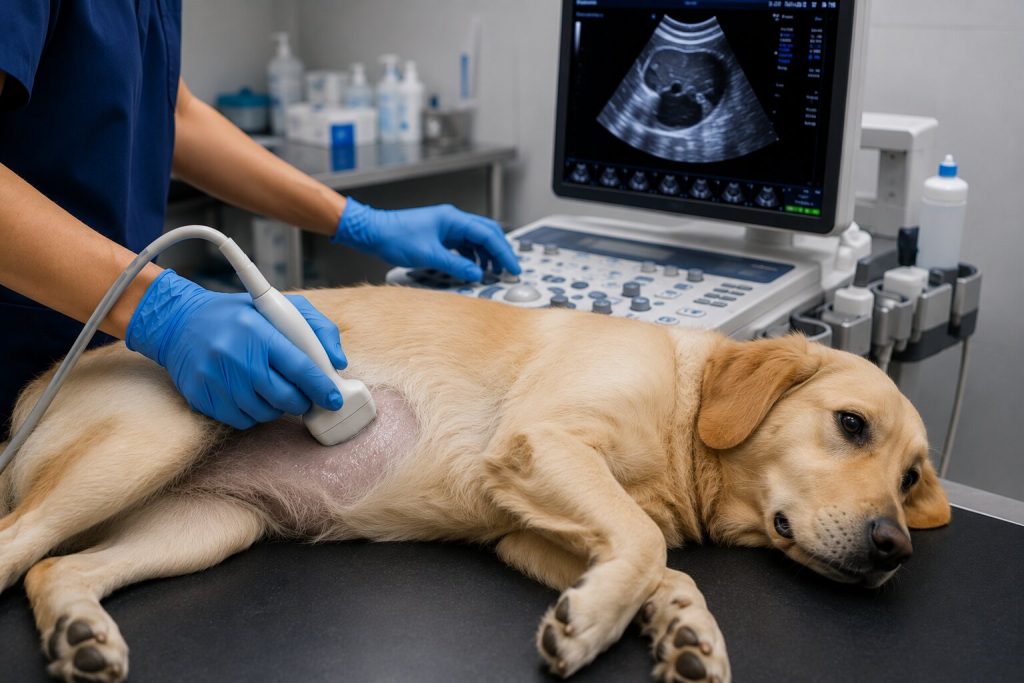
A special probe is moved across the skin while images are displayed on a monitor. The veterinarian evaluates the organs and structures being examined.Step 4: Interpretation
Findings are reviewed and discussed with the pet owner. Additional diagnostics may sometimes be recommended.Does My Pet Need Sedation?
Most pets do not require sedation for routine abdominal ultrasound examinations. Many patients tolerate the procedure very well. However, sedation may occasionally be recommended if:- A patient is extremely anxious
- Additional procedures are needed
- Comfort and safety require it
Is Ultrasound Safe?
Yes. Ultrasound is considered extremely safe and non-invasive. Unlike X-rays, ultrasound does not use radiation. It simply uses sound waves to create images. Because of this, ultrasound is commonly used in both veterinary and human medicine.How Long Does An Ultrasound Take?
Most ultrasound examinations take approximately: 20–45 Minutes The exact time depends on:- The reason for the study
- Patient cooperation
- Complexity of findings
- Additional testing needs
What Happens After The Ultrasound?
Once the examination is complete, your veterinarian will discuss the findings and next steps. Depending on the results, recommendations may include:- Additional diagnostics
- Medication
- Monitoring
- Surgery
- Specialist consultation
- Hospitalization