Understanding Pyometra in Dogs: Signs, Symptoms & Emergency Treatment | Family Pet Medical Center
Understanding Pyometra in Dogs: Signs, Symptoms & Emergency Treatment
Pyometra is one of the most serious emergencies veterinarians encounter in unspayed female dogs. Unfortunately, many pet owners have never heard of pyometra until their dog becomes seriously ill.The good news is that when diagnosed and treated promptly, many dogs recover successfully. The key is recognizing the warning signs early and seeking veterinary care as soon as possible.
At Family Pet Medical Center, our veterinary team is available 24 hours a day, 7 days a week to evaluate emergency pyometra cases and provide advanced treatment when needed.What Is Pyometra?
Pyometra is a severe bacterial infection of the uterus. The condition most commonly affects:- Unspayed female dogs
- Middle-aged dogs
- Senior dogs
What Causes Pyometra?
Pyometra develops due to hormonal changes that occur after a female dog goes through a heat cycle. Following heat, progesterone levels remain elevated. These hormonal changes can:- Thicken the uterine lining
- Reduce uterine contractions
- Create an environment where bacteria can thrive
Open vs. Closed Pyometra
There are two primary forms of pyometra.Open Pyometra
In an open pyometra, the cervix remains partially open. This allows infected discharge to leave the uterus. Owners may notice:- Yellow discharge
- White discharge
- Brown discharge
- Bloody discharge
Closed Pyometra
Closed pyometra is generally considered more dangerous. In this form, the cervix remains closed, trapping infected material inside the uterus. Because there is no visible discharge, diagnosis may be delayed. The uterus can become significantly enlarged and may even rupture, creating a life-threatening emergency.Signs and Symptoms of Pyometra
Symptoms may vary depending on the severity of infection and whether the pyometra is open or closed. Common signs include:Early Symptoms
- Increased thirst
- Increased urination
- Reduced appetite
- Mild lethargy
- Acting "not quite right"
Progressive Symptoms
- Vomiting
- Diarrhea
- Weight loss
- Weakness
- Fever
Advanced Symptoms
- Collapse
- Severe lethargy
- Abdominal enlargement
- Shock
- Difficulty standing
Any unspayed female dog displaying these symptoms should be evaluated immediately.
When Does Pyometra Typically Occur?
Pyometra most often develops:Two To Eight Weeks After A Heat Cycle
This timing is important because many owners may not connect their dog's symptoms to a previous heat cycle. If your dog was recently in heat and begins acting sick, pyometra should be considered a possibility.Why Is Pyometra An Emergency?
Without treatment, pyometra can lead to:- Sepsis
- Kidney damage
- Organ failure
- Uterine rupture
- Shock
- Death
How Is Pyometra Diagnosed?
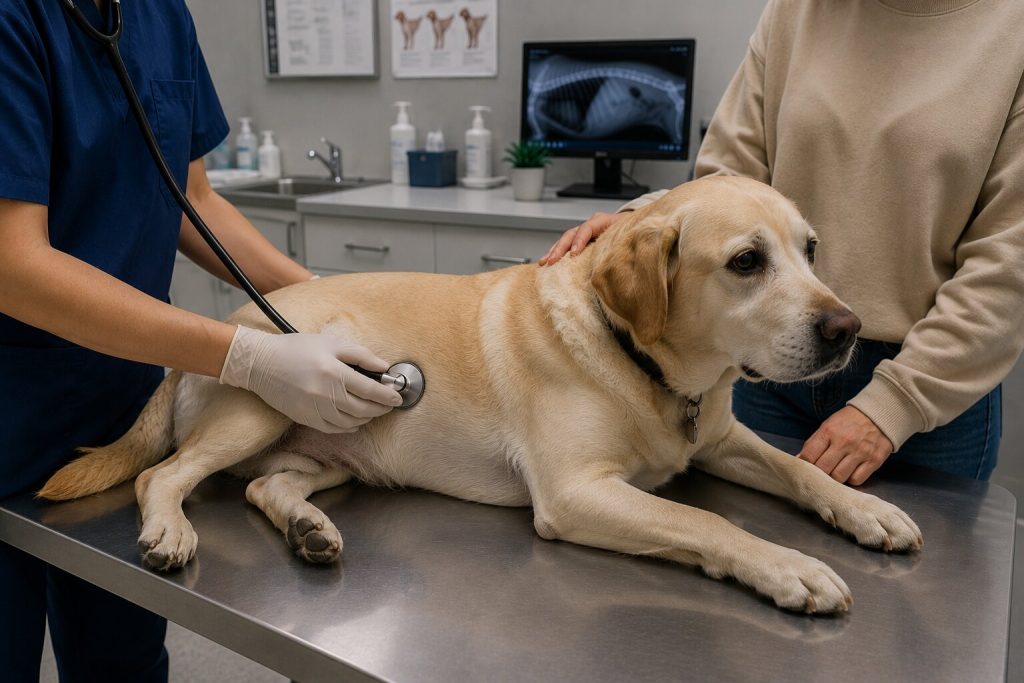
Veterinarians typically use a combination of:Physical Examination
Assessment of:- Hydration
- Heart rate
- Temperature
- Overall condition
Bloodwork
Blood tests may reveal:- Infection
- Inflammation
- Organ dysfunction
Ultrasound
Ultrasound is one of the most effective tools for identifying an infected, fluid-filled uterus.Radiographs (X-Rays)
X-rays may also help visualize uterine enlargement.What Is The Treatment For Pyometra?
The most common and effective treatment is surgery.Emergency Surgery
The infected uterus and ovaries are surgically removed. This procedure is similar to a spay but is significantly more complex because the patient is already ill and the uterus is infected.Additional Treatments May Include
- Intravenous fluids
- Pain management
- Antibiotics
- Hospitalization
- Monitoring and supportive care
What Is Recovery Like?
Recovery depends on:- How quickly treatment was started
- The severity of infection
- Overall patient health
- Activity restriction
- Medication administration
- Follow-up appointments
- Incision monitoring